



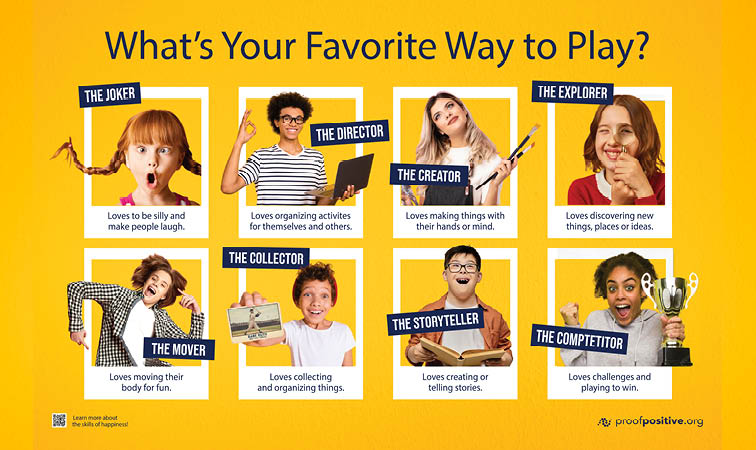

About This Lesson
Play is a powerful connector, especially when students feel seen and respected in how they play.
This discussion-ready poster invites students to reflect on and share their favorite ways to play, helping normalize diverse play styles while building classroom community. It reinforces the idea that all forms of play — quiet, active, imaginative, structured, or sensory — are valid and valuable.
Here’s what you’ll get
- A visually engaging classroom poster
- Inclusive language that celebrates diverse play styles
- A flexible tool for discussion, reflection, or display
Why you’ll love this activity
- Builds belonging and mutual respect
- Sparks meaningful SEL conversations
- Reinforces autonomy and choice
Ways to use
- Morning meetings or circle time
- Classroom culture-building
- SEL walls or calm corners
- Autism-affirming classroom visuals
What is Permission to Play?
Permission to Play is the wellbeing skill of recognizing play as essential and giving ourselves and others the freedom to engage in joyful, curiosity-driven activities without guilt or pressure.
As life gets busier, play often fades. Academic demands increase, schedules fill up, and many students (and adults) begin to believe that play is something you earn after being “productive.” Permission to Play challenges that idea by teaching that play is a powerful practice for learning, emotional regulation, connection, and resilience.
When students are given permission to play in ways that feel authentic to them, they learn that play is a meaningful part of wellbeing at school, at home, and throughout life.
Science of Permission to Play:
The science is clear: play is biologically essential. Neuroscientists have identified dedicated brain systems for play in mammals, showing that play supports learning, creativity, emotional regulation, and social connection.
Across the lifespan, play helps us explore ideas, solve problems, build identity, and connect with others. Children use play to make sense of their experiences and develop flexible thinking skills. Adolescents and adults who engage in play report greater joy, stronger relationships, and higher life satisfaction. For older adults, play supports social connection, mobility, and cognitive health.
Play is also deeply inclusive. For autistic individuals and other neurodivergent learners, honoring diverse play styles can reduce anxiety, support regulation, and foster a sense of belonging. When play is voluntary, joyful, and self-directed, it becomes one of the most accessible tools for wellbeing.
Benefits
Regular, meaningful play can help students, families, and educators:
- Improve emotional regulation and stress management
- Increase engagement, motivation, and focus
- Strengthen relationships and social connection
- Support creativity, curiosity, and flexible thinking
- Foster inclusion by honoring diverse play styles
- Boost overall wellbeing and life satisfaction
Learn more about the science of play.
Looking for more Permission to Play Resources?
- Explore the free Permission to Play Unit Study, which includes teaching slides, additional worksheets and activities, and even IEP and BIP recommendations tailored specifically to students with autism.
Proof Positive’s resources are and will always be free. Be well!
Bonus access to full lesson plans and unit studies on the skills of happiness at our Skill Center.


